A real AR image. Not a simulation.
Look through the combiner and see digital graphics appear over the real world. Start with the moment that makes AR feel possible.
A hands-on AR starting point
Start with a working see-through image instead of a pile of mysterious parts. Once you have seen it work, move the lenses, steer the light, rewrite the graphics, and learn enough to build an idea that is yours.
Honest status: the two-minute first-light experience is the design target for the finished kit. The kit is still in development, and final parts and timing may change.
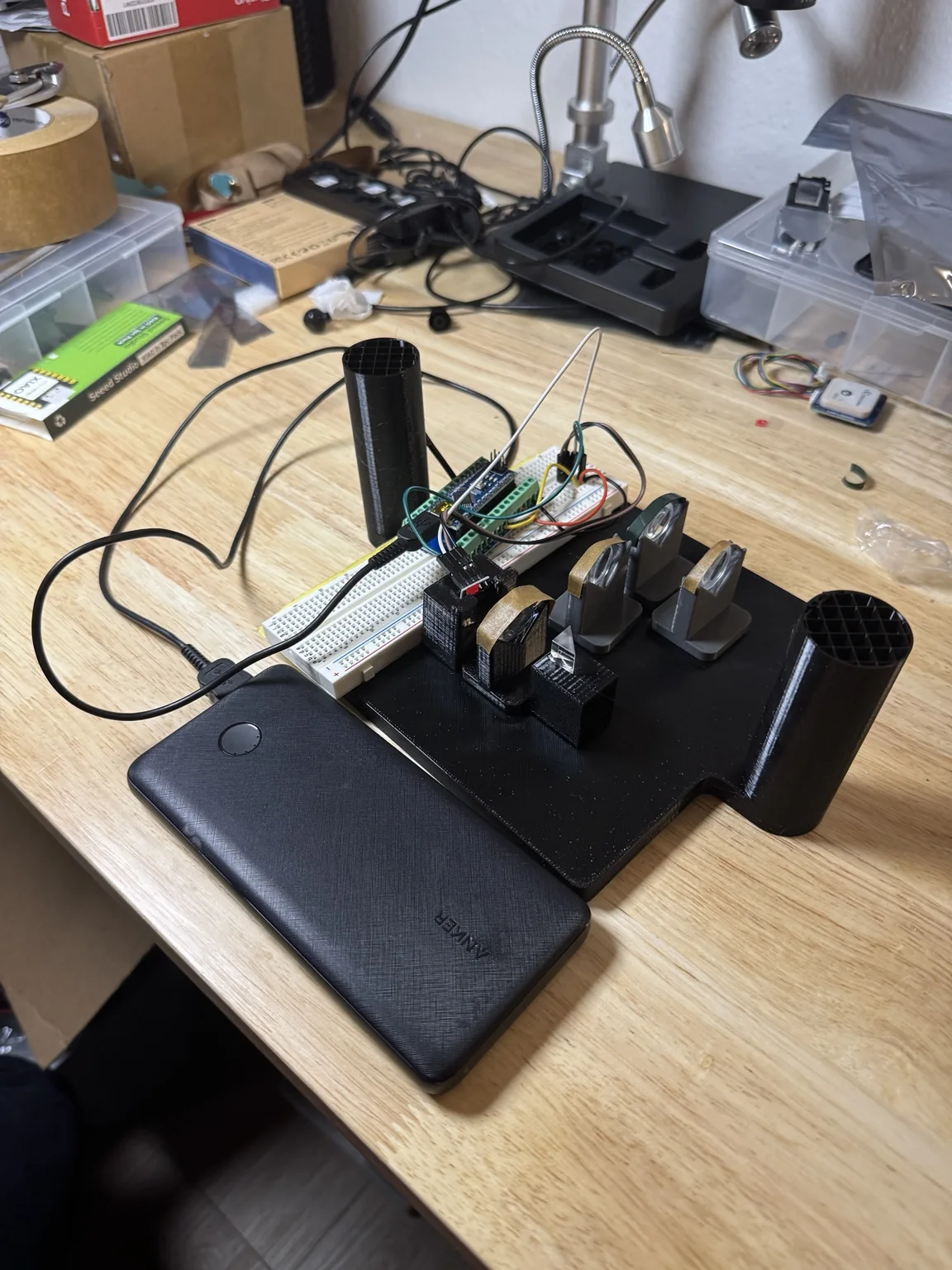
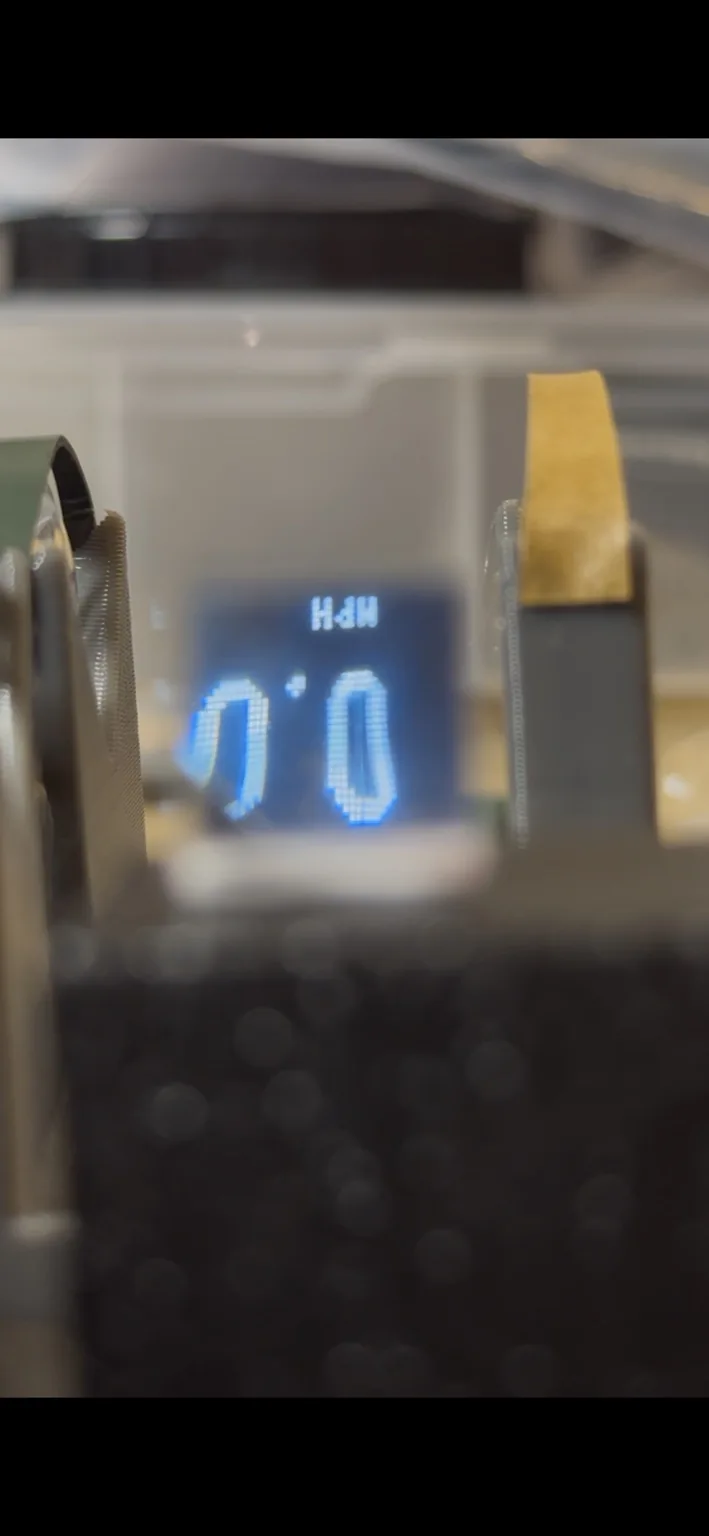
What you are really buying
The first working image gives you a reason to care. Reverse engineering it gives you the understanding to create something new.
Look through the combiner and see digital graphics appear over the real world. Start with the moment that makes AR feel possible.
Swap a lens, change the focus, tilt the mirror, or lose alignment. Every adjustment turns an abstract optics concept into something visible.
Replace the sample graphics, connect a sensor, rearrange the path, and use the working bench as the first prototype of your own idea.
Try one optical principle
This is a small taste of the reverse-engineering experiments: change one physical decision and immediately see what it does to the system.
Interactive course preview
A flat mirror redirects the image. Rotate the mirror by 5°, and the reflected beam rotates by 10°. That small change can make the image miss the combiner entirely.
Drag the slider or use the − / + buttons.
Illustrative geometric model. Real performance also depends on aperture size, optical distance, lens quality, eye position, and alignment.
The target experience
The kit is being designed around a proven starting configuration so curiosity—not troubleshooting—is the first thing you feel.
Place the prepared modules on the guided fixture and connect the controller.
Look through the combiner and get the payoff before the theory lesson.
Move the lens, tilt the mirror, and rebuild the image while learning what each part does.
Change the display content, add data, or redesign the optical layout around an idea of your own.
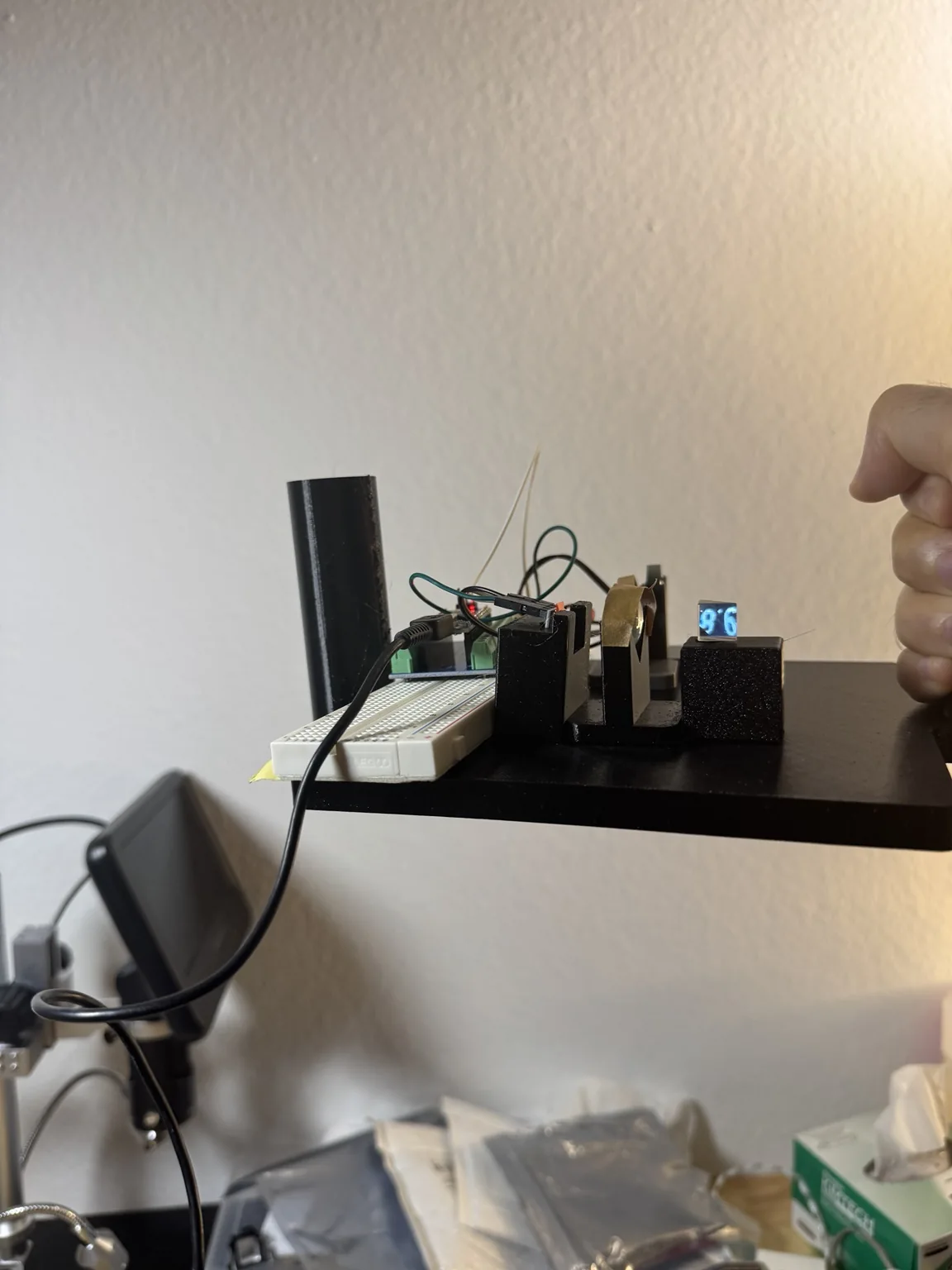
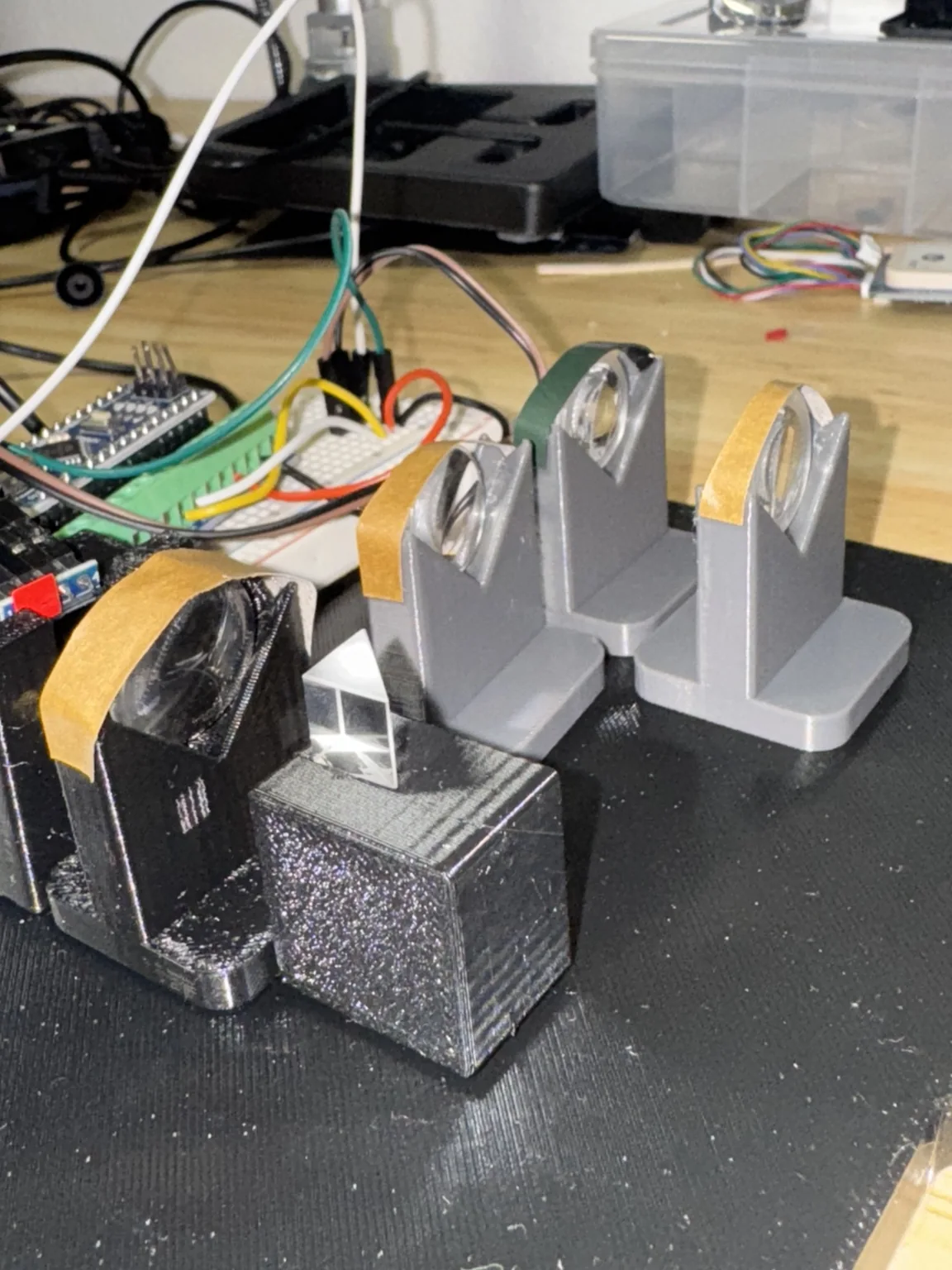
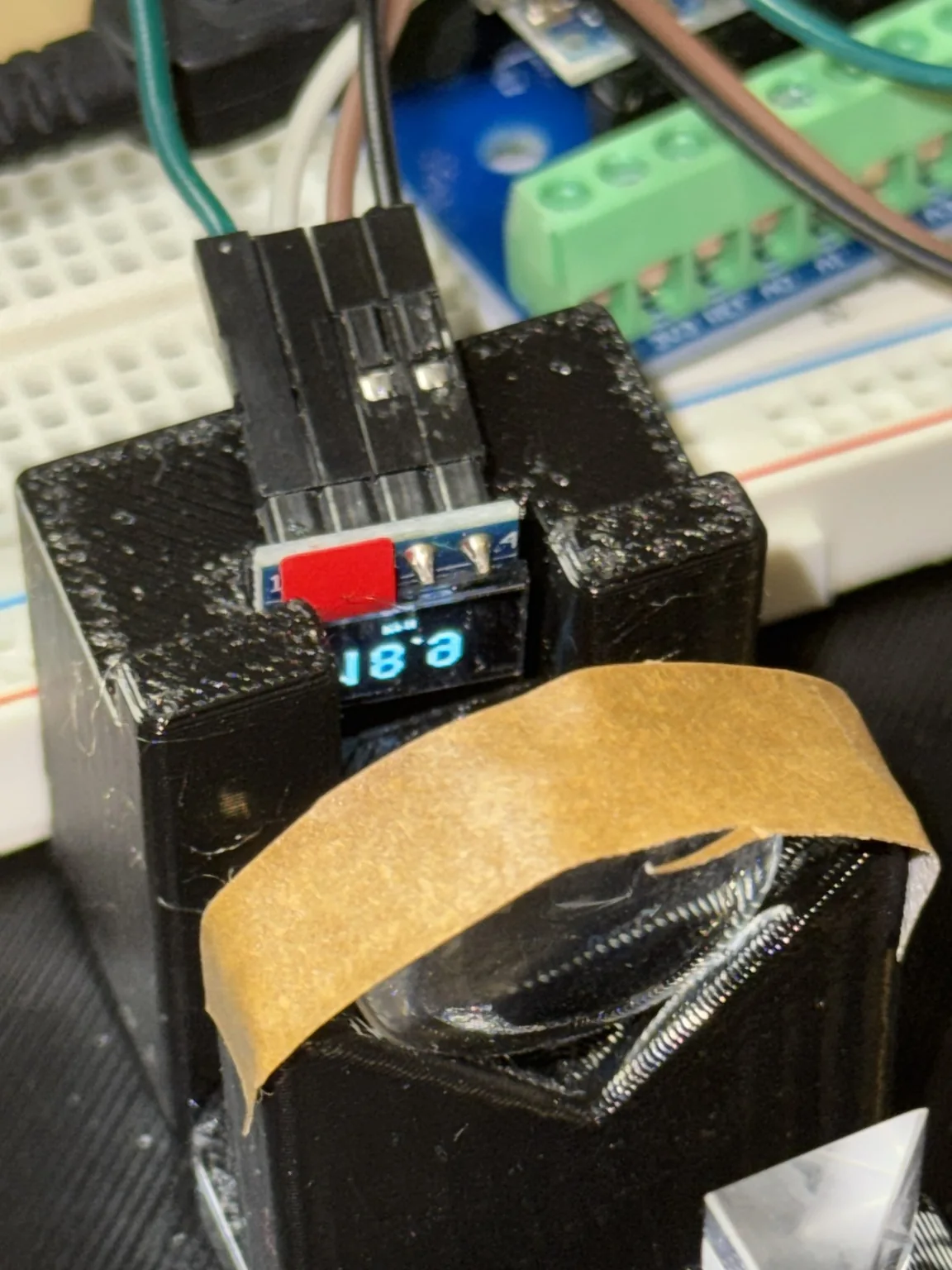
Why I am making this
When I started building movie goggles for swimming, I did not know which displays, lenses, distances, or mirror angles would work together. I bought incompatible parts, lost focus, rebuilt fixtures, and spent months learning how to diagnose a system I could barely see.
The kit is meant to compress that messy beginning into a satisfying first result—then reopen the system so you can understand every decision and make different ones.
See the project that led to the kitPrototype hardware shown · final kit may differPlanned kit + guided course
The goal is a complete starting system you can assemble quickly, understand piece by piece, and keep reconfiguring after the guided build.
Who this is for
You do not need to arrive as an optical engineer. You do need to be curious enough to ask, “What if I changed this?”
You want a first AR win without pretending the engineering is effortless.
You want theory to turn into a physical system you can test and explain.
You already build things and want a useful entry point into display optics.
You have a HUD, wearable, instrument, or interface idea and need a working optical foundation.
The offer in one sentence
I spent two years finding the parts, diagnosing alignment, and learning why tiny see-through displays fail. This kit is meant to turn that detour into a direct, hands-on starting point.
Not two minutes to master AR. Two minutes to stop wondering whether you can begin.
Your own reconfigurable AR experiment platform.
Early access
Get meaningful development updates and hear first if an early kit batch opens. This is not a preorder, and there is no launch date yet.
Practical questions
That is the target experience for the finished kit: begin from a known-good, guided configuration and reach a visible see-through image in about two minutes. It is still being tested, so final setup time may change. The deeper reverse-engineering experiments take longer by design.
No AR-specific background is expected. The guided experience is intended to explain each part when it becomes useful. Comfort following instructions and using a computer will help.
No. It is an open, reconfigurable tabletop development system. It shows the principles behind a real see-through display and gives you a platform for exploring what a headset, HUD, or other invention could become.
That is the point. The planned kit uses removable lenses, adjustable mounts, a folding mirror, a combiner, and programmable electronics so the first working image is a starting point—not the final answer.
The current goal is to bundle the physical optical kit, programmable controller, fixtures, starter code, and guided course for $199. The parts list and price are still being refined through prototyping and supplier quotes.
There is no confirmed launch or shipping date yet. Join early access to hear when testing and first-batch details are ready.