I built goggles that play movies while swimming.
I wanted to watch a movie while swimming. That sounds absurd until you start asking what would actually need to work for it to be possible.
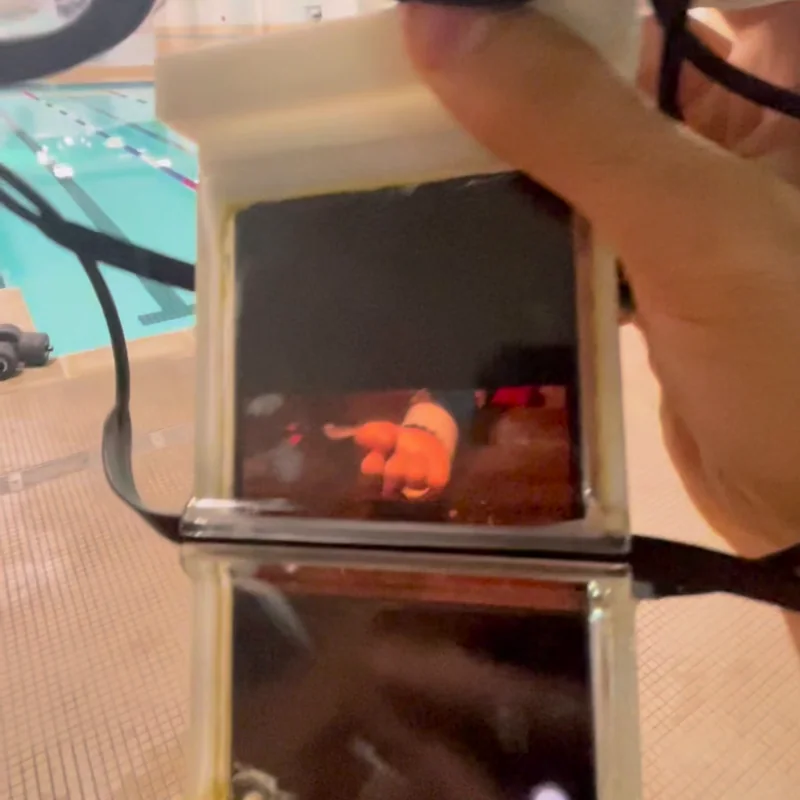
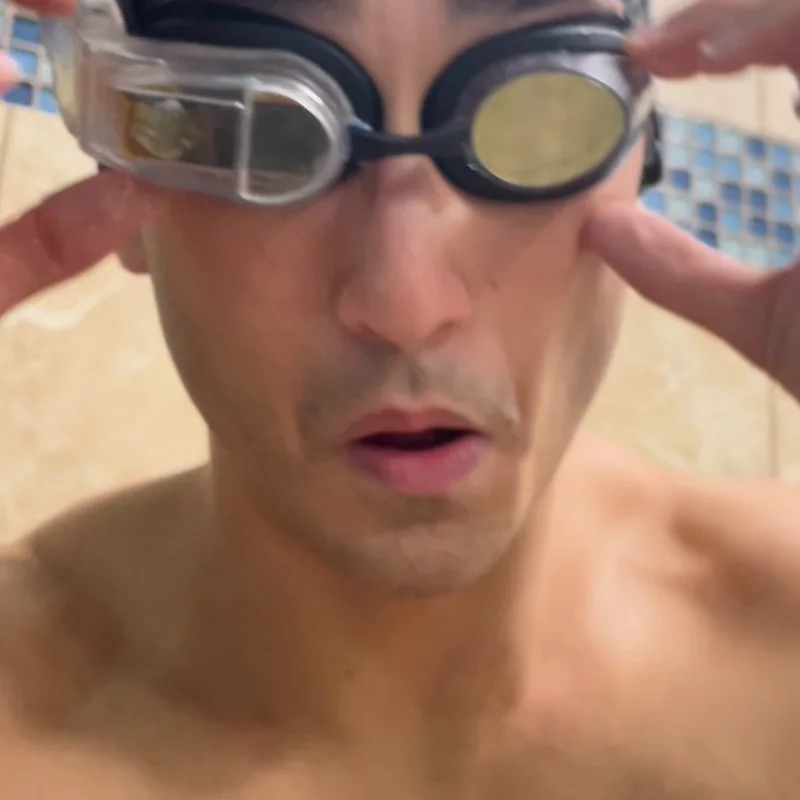
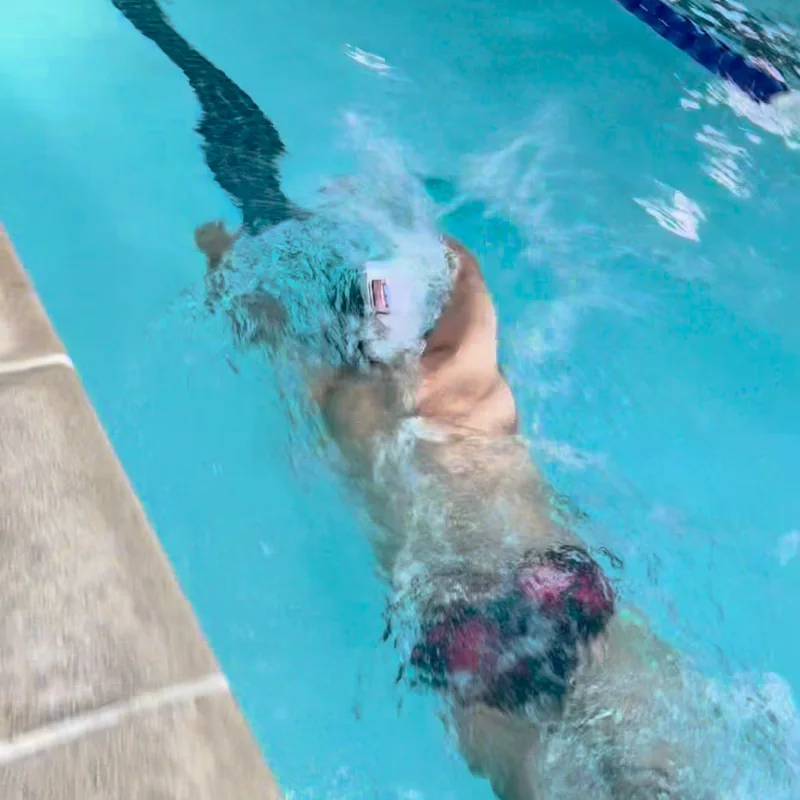
- 2 years: Building and testing
- 90 minutes: A full movie-length swim test
- Working: Pool-tested prototype
My build videos have reached millions of people. This is a working prototype, not a consumer product.
- The challenge: I wanted to watch movies while swimming, but no ordinary display could survive that environment.
- First step: I experimented with tiny displays, lenses and mirrors until I could see a focused image.
- Hard part: I had to make the optics wearable, comfortable and water-resistant through repeated pool tests.
- Proof: One prototype survived a full movie-length swim session. It worked in the pool, not just on my workbench.
- What I learned: A simple, reusable optical test fixture would have saved me weeks of trial and error.
Read the full build logExpand ↓
Start with the smallest proof
- My first challenge wasn't designing a beautiful pair of goggles. It was finding out whether I could make an image visible to an eye, through goggles, in the conditions I actually wanted to use them.
- I worked through experiments with small displays, lenses, positioning and visibility before I had anything that looked like a convincing product. Each step removed one question from a very long list.
Lesson: Don't solve the entire invention on day one. Prove the experience people actually care about.
A display is only one part of the experience
- A picture that looks fine at a workbench doesn't automatically look fine while swimming. Fit, comfort, seeing the environment, condensation, water exposure and the awkwardness of putting equipment on your head all become part of the design problem.
- I kept rebuilding prototypes and testing them in real pool sessions rather than assuming a successful dry test meant I was done. Some versions failed for reasons I hadn't expected before getting in the water.
Lesson: The moment you put a prototype in its real environment, you learn which problems actually matter.
The moment it became real
- Eventually I reached a version that held up long enough for me to watch a full movie while swimming. That was a very different kind of success from merely turning on a display at my desk.
- It still wasn't a polished product. But it was evidence that the core experience could work—and evidence of how much the next iteration would need to improve.
Lesson: A repeatable user experience is stronger proof than a polished render.
What I'd change if I started today
- I spent too much early time rebuilding one-off optical experiments. I'd make the test setup modular so I could move one element, compare what changed, and learn faster.
- That frustration inspired the AR Optics Kit: a way to start with a working see-through display experiment and spend your time understanding it, rather than building a unique fixture for every test.
Want to test the goggles?
- Orange County, California
- Invitation only · No sessions scheduled
- Applicants must travel to the test location
- Filming requires separate consent